
Meet Andy
,Andy Stoll is a serial social entrepreneur, producer and professional speaker. He has co-founded six entrepreneurial-focused organizations and currently serves as a Senior Program Officer in Entrepreneurship at the Kauffman Foundation. Much of his professional career has focused on building pioneering programs, communities, classes and events to help entrepreneurs and creatives turn their ideas into reality.
Andy's work has been featured in The New York Times, The Washington Post and The Wall Street Journal and his portfolio of work includes collaborations with AOL Founder Steve Case, Microsoft Founder Paul Allen, and former Zappos CEO Tony Hsieh.Stoll is a sought after speaker on leadership, creativity, entrepreneurship, communities and travel, and has been a featured speaker at SXSW, numerous TEDx events and more than 100 American universities.
Andy has taught at Cornell College and The University of Iowa; serves as a Global Facilitator for Startup Weekend, and completed a 4-year, 40-country solo trip-around-the-world.
Stoll moonlights as a photographer, sometimes chef and occasional cooking class instructor. He is represented as a speaker by The College Agency.Select Adventures
"I arise in the morning torn between a desire to save the world and a desire to savor the world.
This makes it hard to plan the day." -- E.B. WhiteThe Kauffman Foundation
2016-present
Andy currently serves as a senior program officer at the Kauffman Foundation, one of the world’s largest foundations supporting entrepreneurship. He helps oversee the implementation of the Foundation’s entrepreneurial ecosystem development strategy. The team aims to accelerate the practice of entrepreneurial ecosystem building as a key approach in economic and community development by helping develop the principles, culture, tools, and metrics needed to build successful entrepreneurial communities. Learn more...
Nate Staniforth's Real Magic Tour, producer
2016-2017
Nate Staniforth is a magician, writer, traveler, and host of the Discovery Channel’s international hit TV series Breaking Magic, but don’t think of this as a magic show. Nate abandons the ubiquitous style-without-substance bravado so often associated with magic and appeals instead to the imagination and intellect of his audience. The touring theater show visited dozens of theaters, indy rock venues and art spaces in support of the release of Nate's first book Here Is Real Magic. Learn more...

Seed Here Studio, co-founder
2011-2016
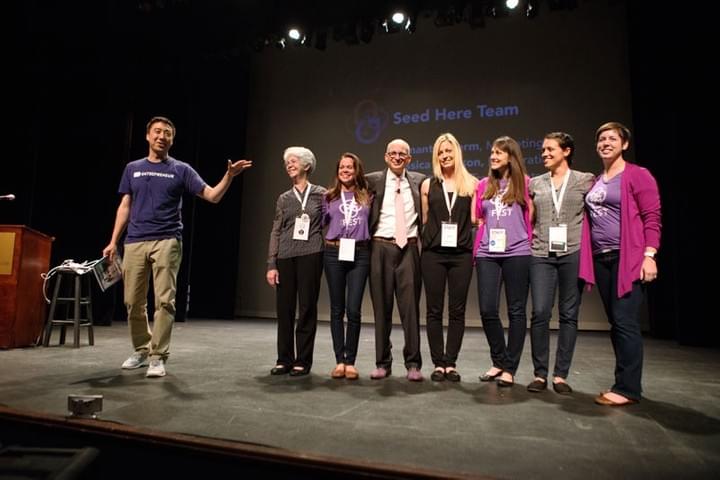
Co-Founded with Amanda Styron West, Seed Here Studio was a not-just-for-profit, social good company working to grow organic, grassroots creative, entrepreneurial and innovation ecosystems in unexpected places. While the company initially focused its work in Iowa, its focus eventually grew nationally. Clients and collaborators included Steve Case, Paul Allen, Up Global, The University of Iowa, The Iowa City Area Economic Development Group and the Cedar Rapids Economic Alliance, among others. Seed Here Studio helped launch and grow NewBoCo, The Iowa Startup Accelerator, EntreFEST, Vault Coworking & Collaboration Space, 1 Million Cups ICR, and The Startup Champions Network.

A Trip Around The World
2006-2010
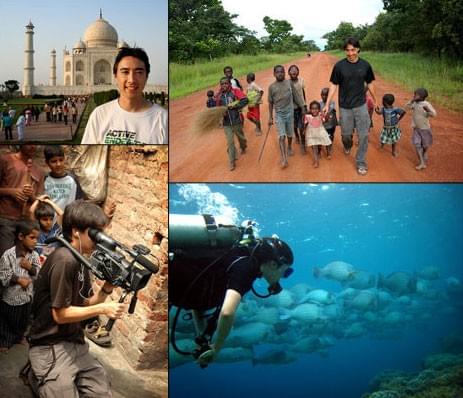
Andy undertook a 4-year solo, independent trip around-the-world through 40 countries in Asia, Africa, Europe, the Middle East, Oceania and the Americas. While on his trip, Andy went in search of experiences that would give him a better first person understanding of how people live in the world. Among other things, he handed out micro-loans in China; played a 19th Century British soldier in a Bollywood movie; worked in a dress factory in Bangkok; joined a team performing cataract surgeries in the remote islands of Fiji and worked on a 500,000 acre cattle ranch in the Australian Outback.
Professional Speaker & Teacher
Andy has spoken at more than 100 American colleges and universities and makes regular appearances on the college lecture circuit. He has been a featured speaker at events and conferences in Armenia, Australia, Bahrain, Bulgaria, Colombia, Europe, Kazakhstan, Hong Kong, Malaysia, New Zealand, Ukraine and across the United States. He has spoken at multiple TEDx events, the Global Entrepreneurial Congress, The White House, Rotary International, and SXSW. Andy often speaks with students to encourage young people to pursue travel, adventure and exploration, as a way to uncover the multitude of opportunities the world offers. Andy previously taught as an adjunct faculty member at Cornell College and has co-taught courses at The University of Iowa.
Andy is represented as a speaker by The College Agency.